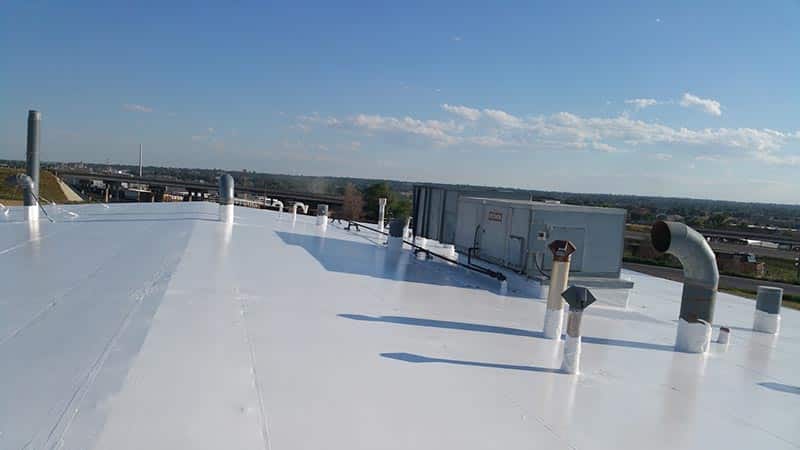
Flat roofs are a type of roof design that is nearly level in contrast to the many types of sloped roofs. They are commonly found on commercial buildings, as well as some residential structures, particularly in areas with minimal rainfall. Here are some key points about flat roofs:
1. Design and Construction
- Structure: Flat roofs typically have a slight pitch (usually 1-10 degrees) to allow water to drain off the surface.
- Materials: They are often constructed with materials like tar and gravel, modified bitumen, or membrane roofing systems such as EPDM (Ethylene Propylene Diene Monomer), TPO (Thermoplastic Polyolefin), or PVC (Polyvinyl Chloride).
2. Advantages
- Cost-Effective: Flat roofs generally cost less to construct due to the simpler design and fewer materials needed compared to pitched roofs.
- Space Utilization: They provide additional usable space, which can be converted into rooftop gardens, terraces, or solar panel installations.
- Modern Aesthetic: Flat roofs are often associated with modern architectural styles, giving buildings a sleek and contemporary look.
3. Challenges
- Water Drainage: Effective drainage is crucial to avoid water pooling, which can lead to leaks and structural damage.
- Maintenance: Flat roofs often require more frequent maintenance and inspections to ensure that the roofing materials are intact and that the drainage systems are functioning correctly.
- Weather Vulnerability: In regions with heavy snowfall, flat roofs can be more prone to damage due to the weight of the snow, which may not easily slide off like on a sloped roof.
4. Applications
- Commercial Buildings: Due to the ability to house large HVAC systems and other equipment, flat roofs are popular for commercial properties.
- Residential Use: They are also used in residential settings, particularly in modern or minimalist designs, and in regions with mild climates.
5. Insulation and Energy Efficiency
- Thermal Performance: Proper insulation is crucial for flat roofs to prevent heat loss in the winter and reduce heat gain in the summer.
- Green Roofing Options: Flat roofs are ideal for green roofs, where plants are grown to provide insulation, reduce runoff, and improve air quality.