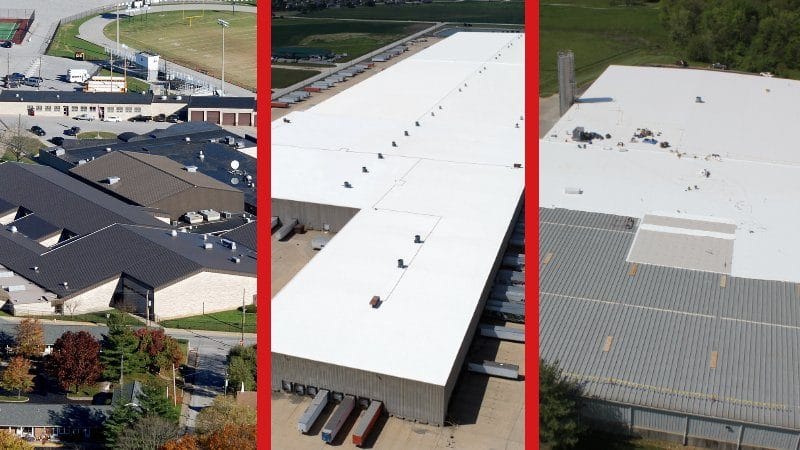
Commercial roofing refers to the materials and methods used to construct and maintain roofs on commercial buildings, such as office buildings, retail stores, warehouses, and other large structures. Here are some key aspects of commercial roofing:
Types of Commercial Roofing Systems
- Built-Up Roofing (BUR)
- Consists of multiple layers of bitumen and reinforcing fabrics.
- Finished with a top layer of aggregate or coating.
- Known for durability and multi-layer protection.
- Modified Bitumen Roofing
- Similar to BUR but uses modified bitumen membranes.
- Offers enhanced flexibility and strength.
- Installed using heat or cold adhesives.
- Single-Ply Roofing
- Includes materials like EPDM (ethylene propylene diene monomer), TPO (thermoplastic olefin), and PVC (polyvinyl chloride).
- Lightweight and easy to install.
- Offers excellent UV and chemical resistance.
- Metal Roofing
- Made from materials like steel, aluminum, or copper.
- Durable, fire-resistant, and energy-efficient.
- Often used for steep-slope applications.
- Spray Polyurethane Foam (SPF)
- Applied as a liquid that expands into foam, creating a solid layer across the roof.
- Provides excellent insulation and waterproofing.
- Green Roofing
- Incorporates vegetation and soil over a waterproof membrane.
- Offers benefits like improved insulation, reduced heat island effect, and stormwater management.
Important Considerations
- Durability: Commercial roofs must withstand various weather conditions, including heavy rain, snow, and strong winds.
- Energy Efficiency: Reflective materials and proper insulation can reduce energy costs.
- Maintenance: Regular inspections and maintenance are crucial for longevity.
- Cost: Initial installation costs vary depending on the material, but long-term costs should consider maintenance and energy savings.
Installation and Maintenance
- Professional Installation: Ensures that the roofing system is installed correctly and adheres to local building codes.
- Regular Inspections: Identifies potential issues early, preventing costly repairs.
- Repairs and Upgrades: Timely repairs and upgrades can extend the life of the roof and improve its performance.